

If you use CAM software such as Siemens NX CAM, Fusion, or Mastercam, you have probably heard the term CNC postprocessor. But what exactly does it do?
Simply put, a postprocessor is the bridge between your CAM software and your CNC machine. It converts CAM toolpaths into NC code that the machine controller can understand and execute.
Without a postprocessor, a machining program created in CAM cannot run on a CNC machine.
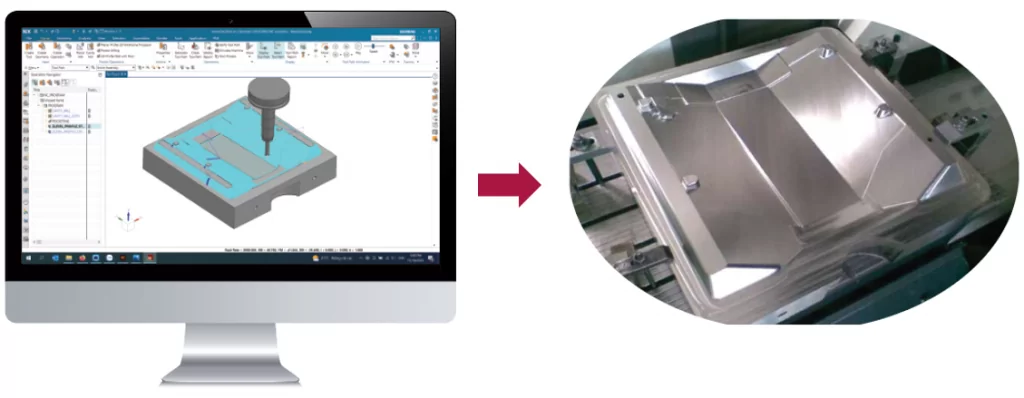
How a CNC Postprocessor Converts Toolpaths into NC Code
When a programmer creates toolpaths in CAM software, the result is not yet machine-ready.
The postprocessor translates these toolpaths into machine-specific NC code, including:
- G-codes
- M-codes
- Tool changes
- Work offsets
- Machine functions
Different CNC machines often require different output formats, even when they perform similar machining operations.
Why Is a CNC Postprocessor Important?
Every CNC machine has its own configuration, controller, and programming requirements.
A properly configured postprocessor helps ensure that the generated NC code behaves as expected on the machine.
Benefits include:
- Reliable NC code output
- Reduced manual editing
- Improved programming efficiency
- Better support for machine-specific functions
- Lower risk of machining errors
This becomes especially important for 5-axis and mill-turn machines where machine motion is more complex.
Why Combine a Postprocessor with Machine Simulation?
Generating NC code is only one part of the process.
Many manufacturers also use machine simulation to verify the NC code before production.
By combining a machine-specific postprocessor with real NC code simulation, programmers can:
- Verify machine motion
- Detect potential issues before machining
- Improve confidence in the NC program
- Reduce setup and production risks
This approach is becoming increasingly common in advanced CNC manufacturing environments.
Frequently Asked Questions
Can one postprocessor work for all CNC machines?
No. Different CNC machines and controllers often require different postprocessor configurations.
Do I need a custom postprocessor?
For simple machining applications, a generic postprocessor may be sufficient. For 5-axis, mill-turn, or production environments, a machine-specific postprocessor is usually recommended.
What is the difference between a postprocessor and machine simulation?
A postprocessor generates NC code, while machine simulation verifies how that code behaves on a virtual machine before it is run on the actual CNC machine.
Conclusion
A CNC postprocessor is a critical component of the digital manufacturing workflow. It converts CAM toolpaths into machine-ready NC code and helps ensure that programs run correctly on the shop floor.
As CNC machines become more sophisticated, particularly in 5-axis and mill-turn machining, having the right postprocessor can improve reliability, reduce programming risks, and support more efficient production.